Ammonia Management in Pangasius Culture: Causes, Risks & Solutions with HL-AMMONIL (F)
Ammonia Problem in Pangasius Culture: How Farmers Can Manage It
Pangasius farming is a high-biomass aquaculture system where effective water-quality management becomes increasingly important as fish grow and feeding intensity increases.
Among the major water-quality challenges in intensive fish culture is ammonia accumulation.
Ammonia can originate from fish metabolism, uneaten feed, fecal matter and decomposition of organic material. If ammonia levels rise and remain elevated, fish may experience environmental stress and reduced feeding performance.
For this reason, regular monitoring and proactive ammonia management should be an important part of Pangasius pond management.
What Causes Ammonia in Pangasius Ponds?
Ammonia is a natural nitrogenous waste product in aquaculture systems.
Common sources include:
1. Fish Metabolism
Fish release nitrogenous waste into the surrounding water. As fish biomass increases, the nitrogen load generated by the culture system can also increase.
2. Uneaten Feed
Overfeeding can result in feed remaining in the pond. Decomposition of this organic material contributes to nitrogen loading.
3. Fecal Waste
Fish feces contain organic nitrogen compounds that can contribute to ammonia production during decomposition.
4. Excess Organic Matter
Dead algae, accumulated sludge and other decomposing materials can increase the organic load of the pond.
5. High Stocking Density
Higher stocking density means higher biomass and potentially greater waste production.
6. Weak Biological Filtration
Beneficial microorganisms play an important role in the natural transformation of nitrogenous compounds. When biological activity is insufficient or disturbed, ammonia can accumulate.
Why Is Ammonia Important in Pangasius Farming?
Ammonia occurs primarily in two forms:
NH₃ – Unionized ammonia
NH₄⁺ – Ionized ammonium
The unionized form, NH₃, is the more toxic form to fish.
The proportion of unionized ammonia is affected by factors such as pH and temperature. Consequently, ammonia management should always be considered together with overall water-quality monitoring.
High ammonia conditions may be associated with:
Fish stress
Reduced feeding response
Poor growth performance
Abnormal swimming behaviour
Surface activity or gasping under severe conditions
Greater sensitivity to environmental stress
Unstable pond conditions
Farmers should therefore monitor water quality rather than waiting for visible fish problems.
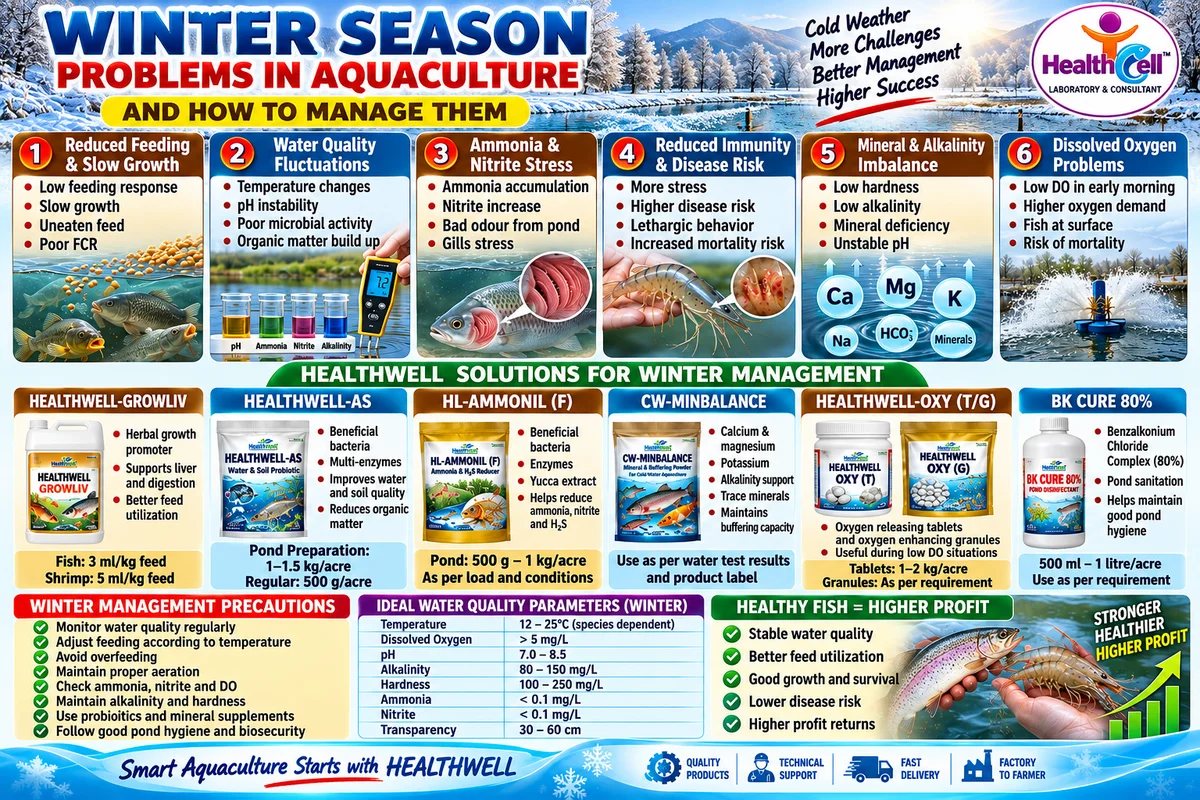
How to Control Ammonia in Pangasius Culture
There is no single management action that replaces good pond management.
A successful ammonia-management program should combine several practices.
1. Monitor Water Quality Regularly
Farmers should regularly evaluate:
Total Ammonia Nitrogen (TAN)
pH
Temperature
Dissolved Oxygen
Nitrite
Alkalinity
Water colour and transparency
Regular testing helps identify changing pond conditions early.
2. Avoid Overfeeding
Feed should be adjusted according to:
Fish biomass
Feeding response
Water temperature
Fish health
Culture stage
Excess feed becomes an unnecessary organic load.
3. Maintain Adequate Dissolved Oxygen
Good aeration supports fish respiration and beneficial microbial processes.
Oxygen management becomes particularly important as biomass and feeding intensity increase.
4. Manage Organic Matter
Accumulated sludge, fecal matter, dead algae and uneaten feed can contribute to increasing nitrogen loading.
Regular pond-bottom and organic-load management is therefore important.
5. Support Beneficial Microbial Activity
Biological water management can help support the natural processing of nitrogenous wastes.
This is an important part of a long-term ammonia-management strategy.
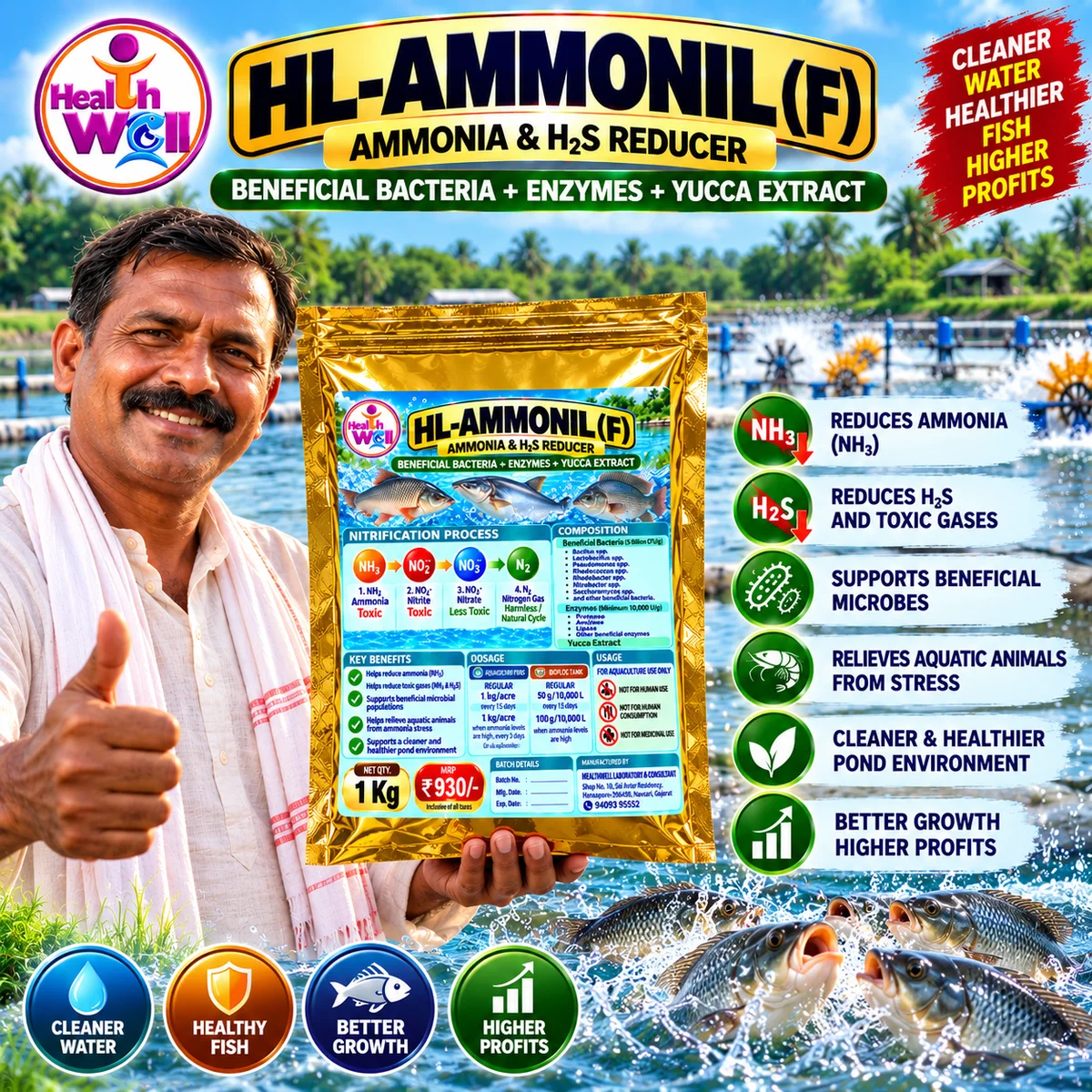
HL-AMMONIL (F) for Ammonia Management
HL-AMMONIL (F) is an aquaculture water-management solution designed to support farmers dealing with ammonia-related water-quality challenges.
It can be incorporated into a broader Pangasius pond-management program where maintaining water quality and managing nitrogenous waste are important priorities.
HL-AMMONIL (F) can be considered when:
Fish biomass is increasing
Feeding intensity is high
Organic loading is increasing
Ammonia readings begin to rise
Pond water quality becomes unstable
The farmer wants a proactive water-management program
The goal is to move from reactive ammonia treatment to proactive pond management.
A Complete Ammonia-Management Approach
For better pond management, farmers should combine:
Proper Feeding
↓
Organic Load Management
↓
Adequate Aeration
↓
Regular Water Testing
↓
Beneficial Microbial Management
↓
Ammonia Monitoring
↓
HL-AMMONIL (F)
This integrated approach helps farmers manage the pond environment throughout the culture cycle.
What to Do When Ammonia Starts Increasing?
If ammonia begins to rise, farmers should investigate the underlying cause rather than relying only on a quick treatment.
Check:
1. Feeding: Is feed quantity higher than actual consumption?
2. Biomass: Has fish biomass increased significantly?
3. Dissolved Oxygen: Is aeration adequate?
4. pH: Has pH increased or fluctuated?
5. Temperature: Are temperatures elevated?
6. Organic Load: Is there excessive sludge, dead algae or uneaten feed?
7. Nitrite: Is the nitrogen cycle also showing signs of imbalance?
8. Water Exchange: Is the current water-management strategy adequate?
9. Biological Activity: Is beneficial microbial activity being maintained?
Using water-test results together with these observations gives farmers a more complete picture of the pond.
Prevention Is Better Than Emergency Management
Ammonia problems are easier to manage when detected early.
A proactive Pangasius farmer should establish a routine involving:
TEST → ANALYZE → MANAGE → MONITOR
Instead of waiting for fish to show stress, regular water-quality testing can help identify changes before they become major operational problems.
HL-AMMONIL (F): Supporting Smarter Pangasius Pond Management
Pangasius culture requires continuous management as fish biomass increases.
HL-AMMONIL (F) can be incorporated into an integrated water-quality management program alongside proper feeding, aeration, organic-load control and regular water testing.
Smart Pond Management Starts with Water Management
Better Monitoring → Better Management → More Stable Culture Conditions
For product application, always follow the current product label, recommended dosage and manufacturer instructions.
Frequently Asked Questions
1. What causes ammonia in Pangasius ponds?
Ammonia can originate from fish metabolism, fecal waste, uneaten feed and decomposition of organic matter. High biomass and excessive feeding can increase nitrogen loading.
2. Why does ammonia increase in fish ponds?
Ammonia can increase when nitrogenous waste production exceeds the pond's capacity to biologically process and remove it.
3. Is ammonia harmful to Pangasius?
Elevated ammonia, particularly unionized NH₃, can create stressful water-quality conditions for fish. The potential impact depends on concentration, exposure duration and environmental factors such as pH and temperature.
4. How can farmers manage ammonia?
Farmers can combine regular water testing, proper feeding, adequate aeration, organic-load management and biological water management.
5. What should be checked when ammonia increases?
Check TAN/ammonia, pH, temperature, dissolved oxygen, nitrite, feeding levels, fish biomass and organic load.
6. Can HL-AMMONIL (F) be used for Pangasius culture?
HL-AMMONIL (F) is intended as an aquaculture water-management solution that can be incorporated into a Pangasius pond-management program. Follow the product label for dosage and application instructions.
7. Should farmers wait until fish show stress before managing ammonia?
No. Routine monitoring and preventive pond management are preferable to waiting for visible signs of environmental stress.
8. Does aeration help with ammonia management?
Adequate dissolved oxygen supports fish health and aerobic microbial processes involved in water-quality management. Aeration alone, however, should not be considered a complete ammonia-control strategy.
9. Does pH affect ammonia toxicity?
Yes. The proportion of total ammonia present as unionized NH₃ generally increases as pH and temperature increase.
10. How often should Pangasius farmers test water?
Testing frequency should depend on the culture stage, stocking density, feeding intensity and pond stability. During periods of rapid biomass increase or unstable water quality, more frequent testing may be appropriate.
Final Takeaway
Ammonia management is a continuous process—not a one-time treatment.
Pangasius farmers can improve their pond-management program by combining:
✓ Regular water testing
✓ Controlled feeding
✓ Adequate aeration
✓ Organic-load management
✓ Beneficial microbial management
✓ Proactive ammonia monitoring
✓ Appropriate water-management products such as HL-AMMONIL (F)
HL-AMMONIL (F)
Smart Ammonia Management for Pangasius Culture
Monitor Your Water. Manage Your Pond. Protect Your Culture.
SEO FAQ Schema-Ready Content
Use the following FAQ content in your website's FAQ structured-data implementation:
Q: What causes ammonia in Pangasius ponds?
A: Ammonia can come from fish metabolism, fecal waste, uneaten feed and decomposition of organic matter. High fish biomass and excessive feeding can increase nitrogen loading.
Q: How can ammonia be managed in Pangasius culture?
A: Ammonia management should combine regular water testing, controlled feeding, adequate aeration, organic-load management and biological water management.
Q: What is HL-AMMONIL (F)?
A: HL-AMMONIL (F) is an aquaculture water-management solution designed to support ammonia-related pond-management programs in fish culture, including Pangasius farming.
Q: Does pH affect ammonia in fish ponds?
A: Yes. pH and temperature influence the proportion of ammonia present as the more toxic unionized NH₃ form.
Q: What should farmers check when ammonia rises?
A: Farmers should check TAN/ammonia, pH, temperature, dissolved oxygen, nitrite, feeding levels, fish biomass and organic load.
Q: Can HL-AMMONIL (F) be used as part of Pangasius pond management?
A: Yes. HL-AMMONIL (F) can be incorporated into an integrated water-management program. Farmers should follow the product's current label dosage and application instructions.
Suggested SEO Tags
Pangasius Farming | Ammonia Management | Fish Pond Water Quality | Pangasius Water Management | Fish Farming | Aquaculture | Ammonia Control | HL-AMMONIL (F) | Pangasius Pond Management | Fish Farm Water Treatment